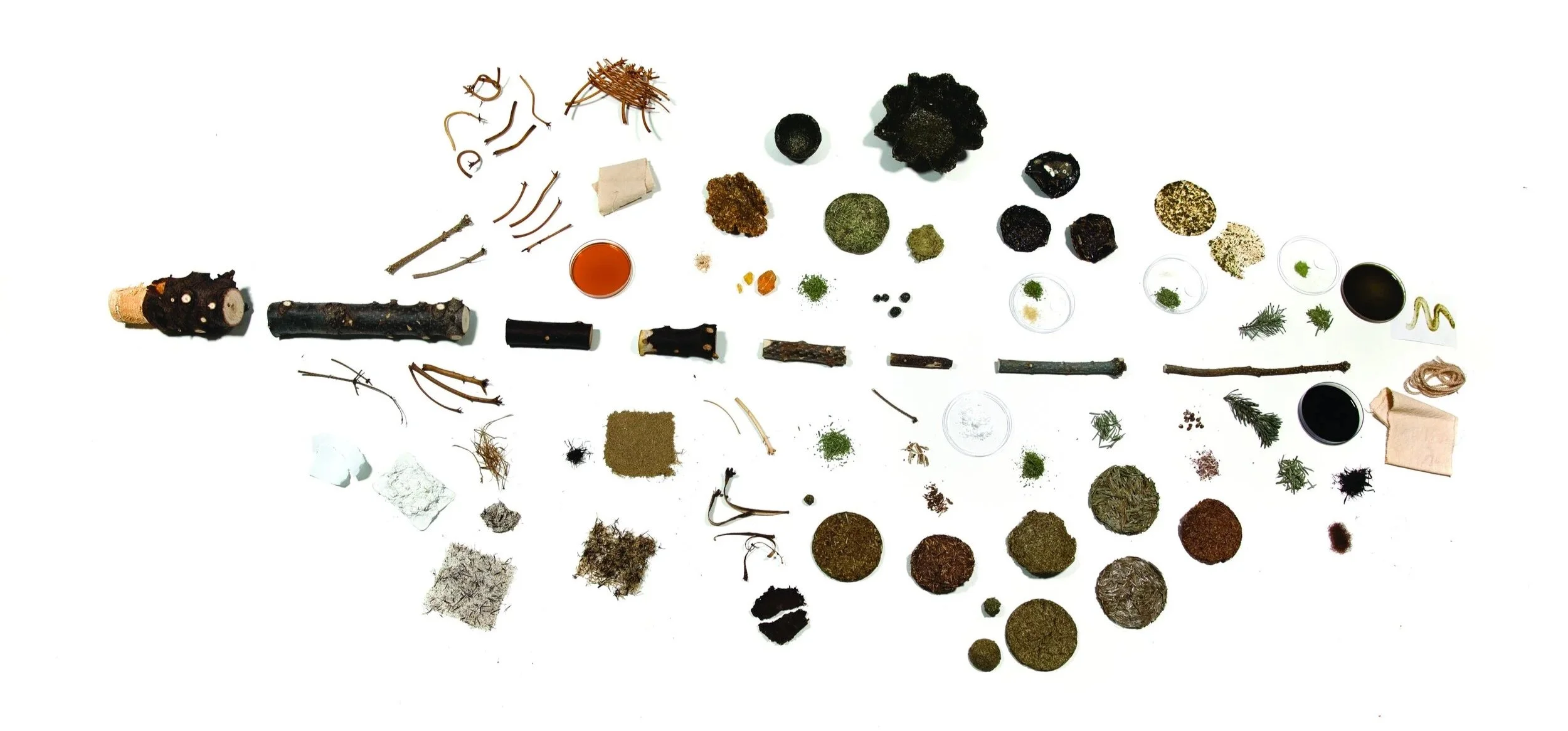
What are the material possibilities of 1 Christmas tree?


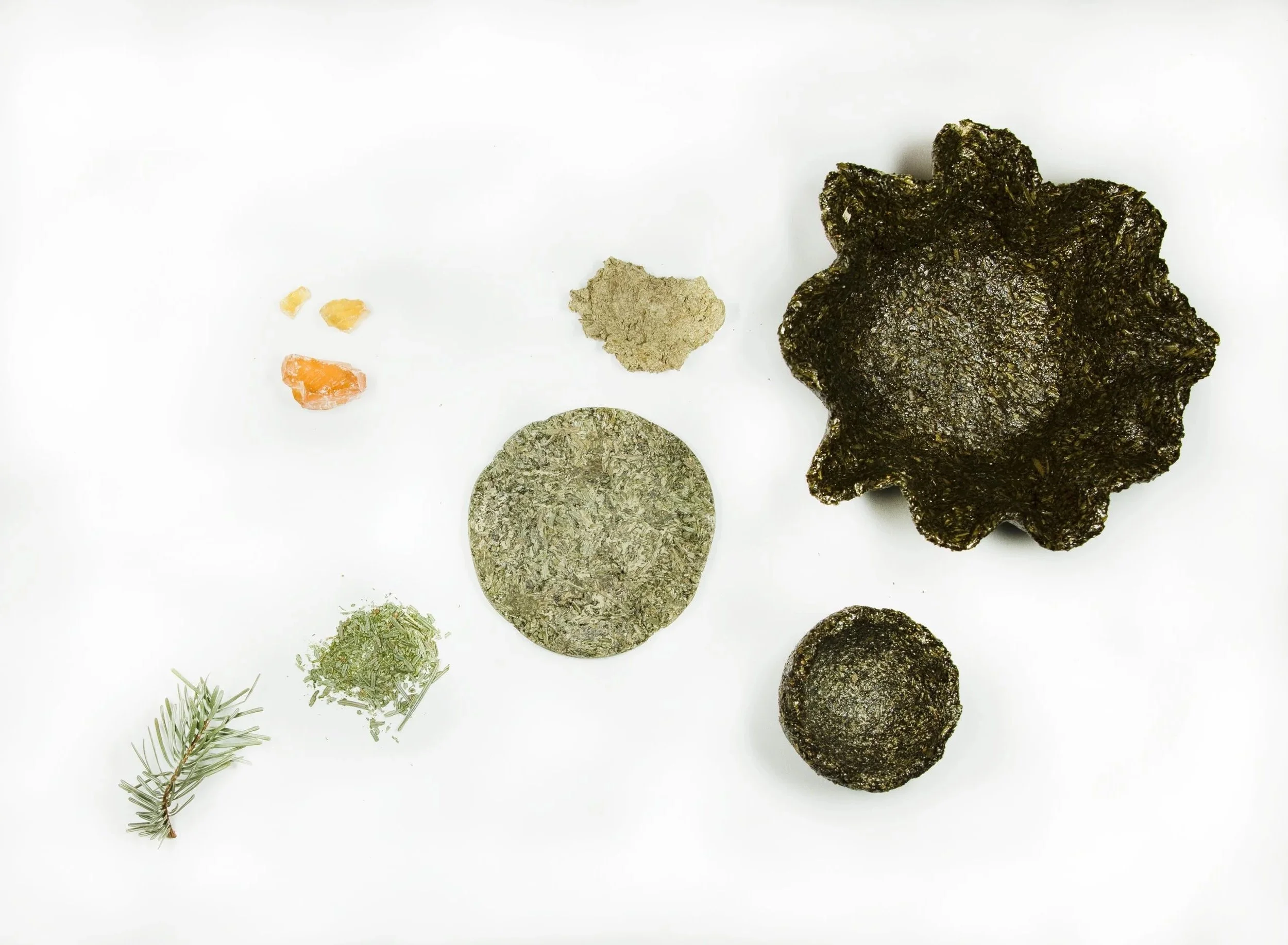
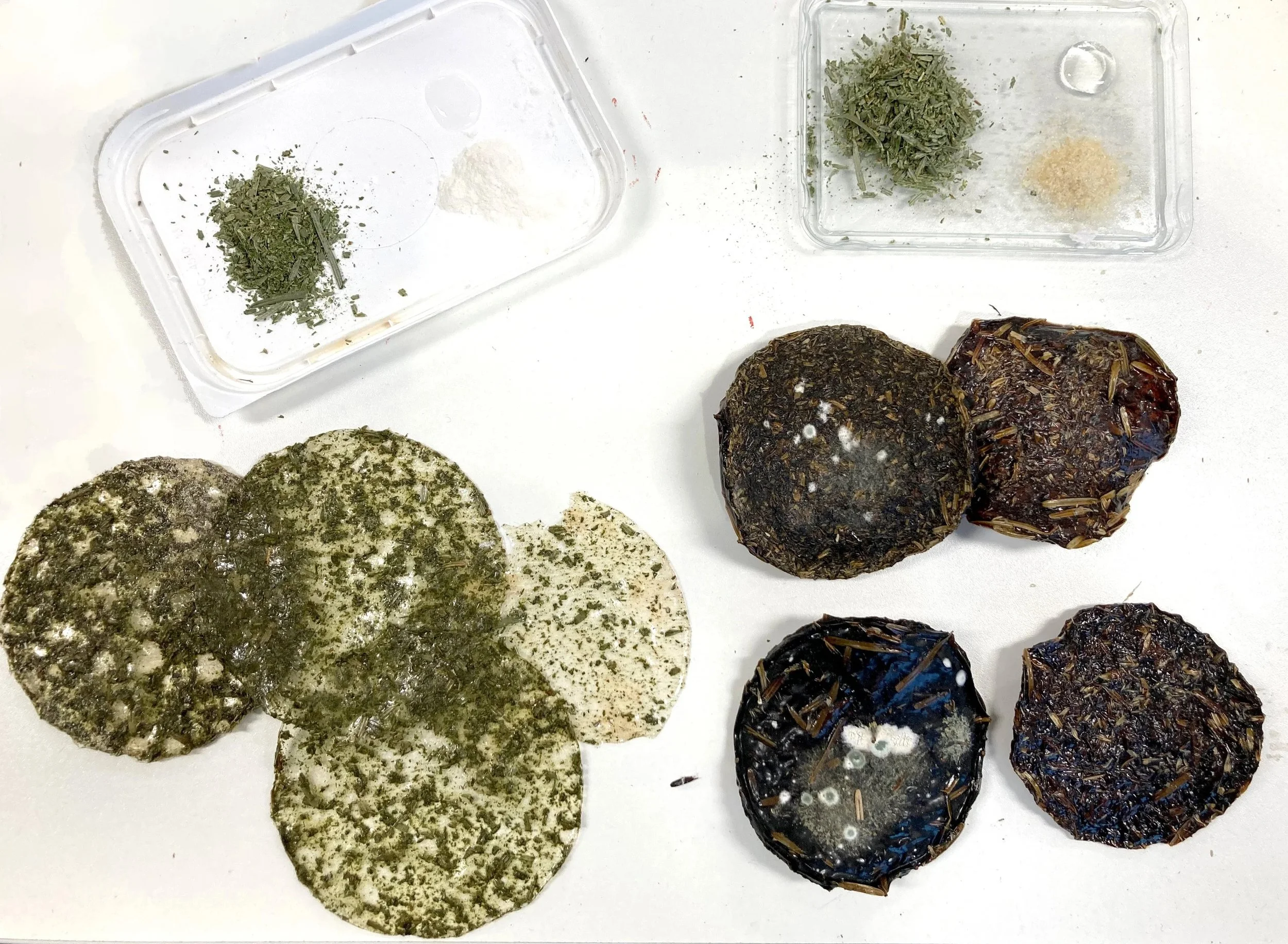
Mixing pine needles with pine resin to create a biomaterial. I heated the hard resin in a double boiler and then mixed in pine needles. The resin hardens quickly so there are only around 20 seconds to shape and mold the material until it hardens. The resulting material is a strong and hard and unporous piece that can hold cool liquids and can be reheated and remolded.
I would like to use the resin from the same pine tree that I used for these experiments but I wasn’t able to extract enough from the dry, dying tree so I used an outside source.
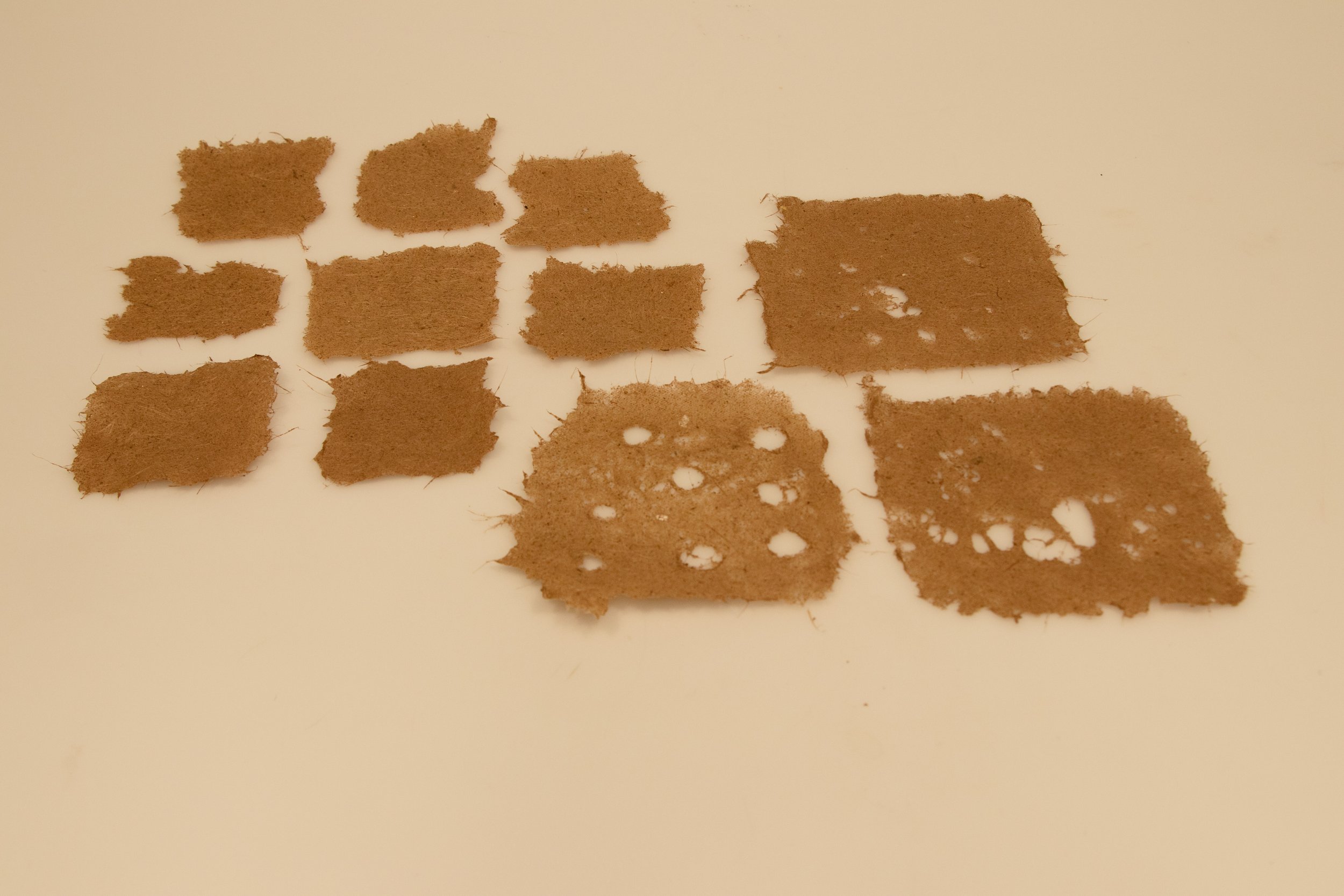
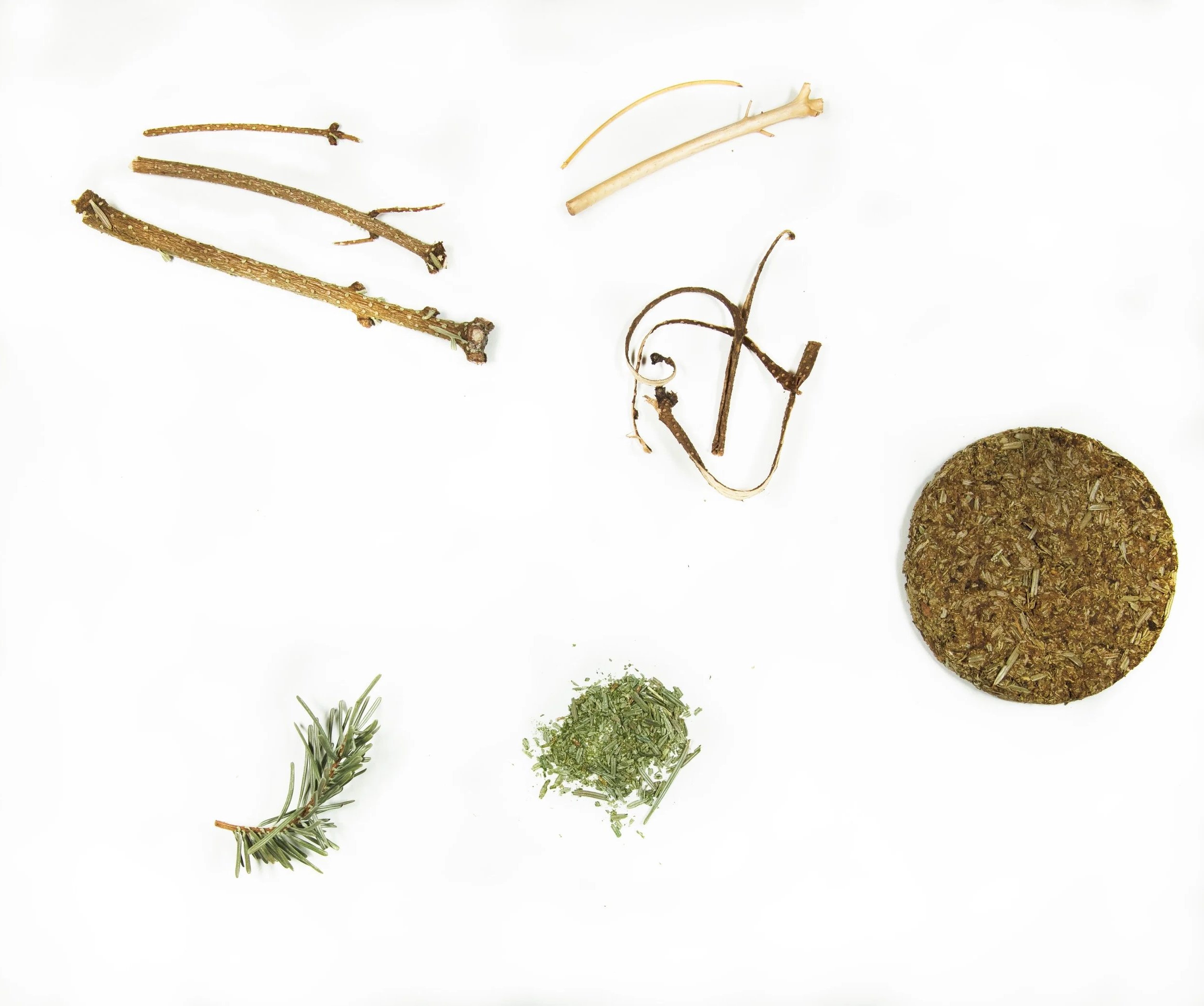
Mixing pine needles with other binders to create composite materials. I tried mixing them with them with pulp from the bark I stripped from branches after I noticed that the inside of the bark was sticky. This bound the needles together and even after it dried it created a material that stayed together and didn’t mold. This material was more fragile and would dissolve in water.
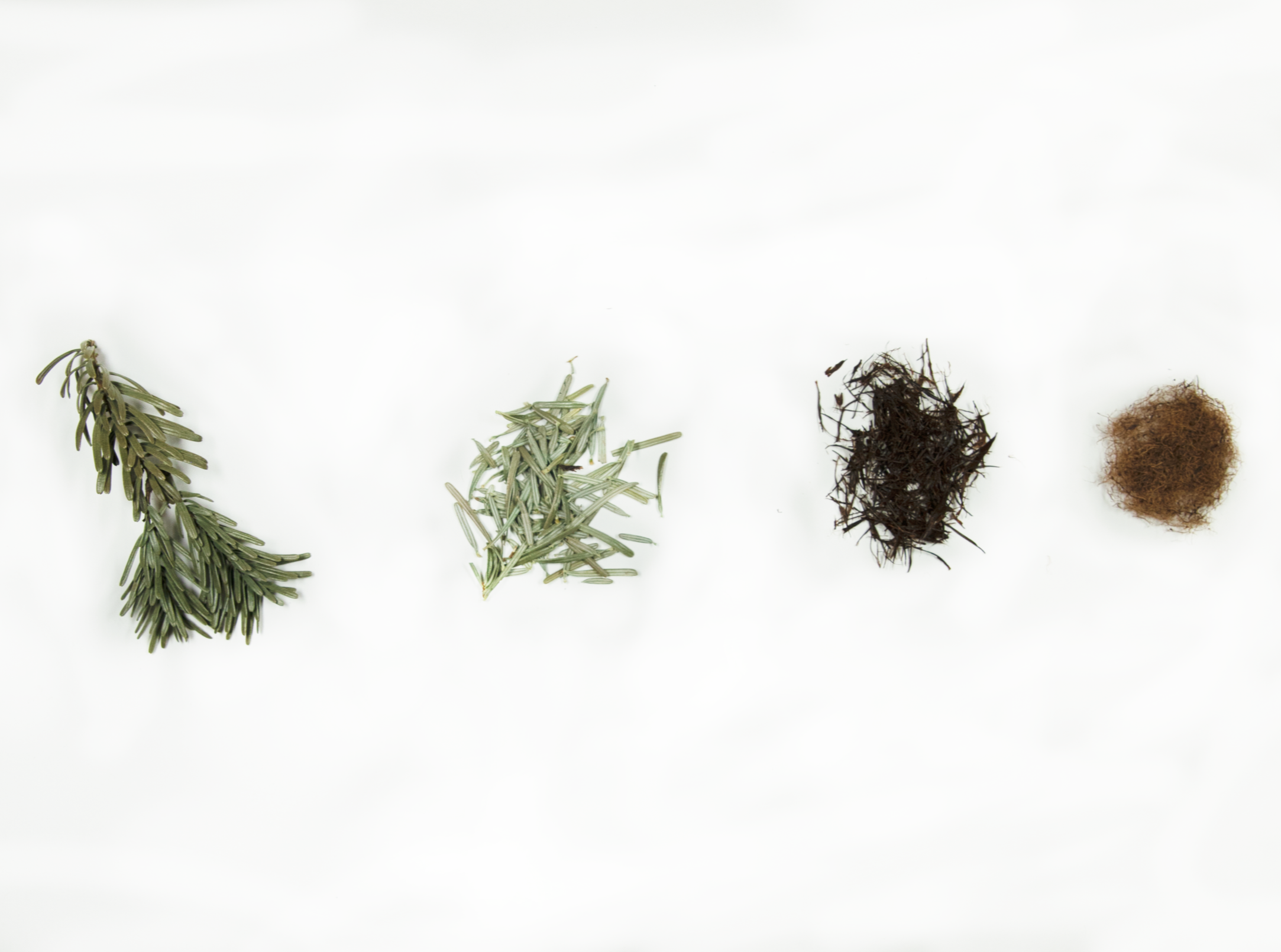
Pine Needles
The final product from these experiments was a recipe book - made only of materials from the tree.
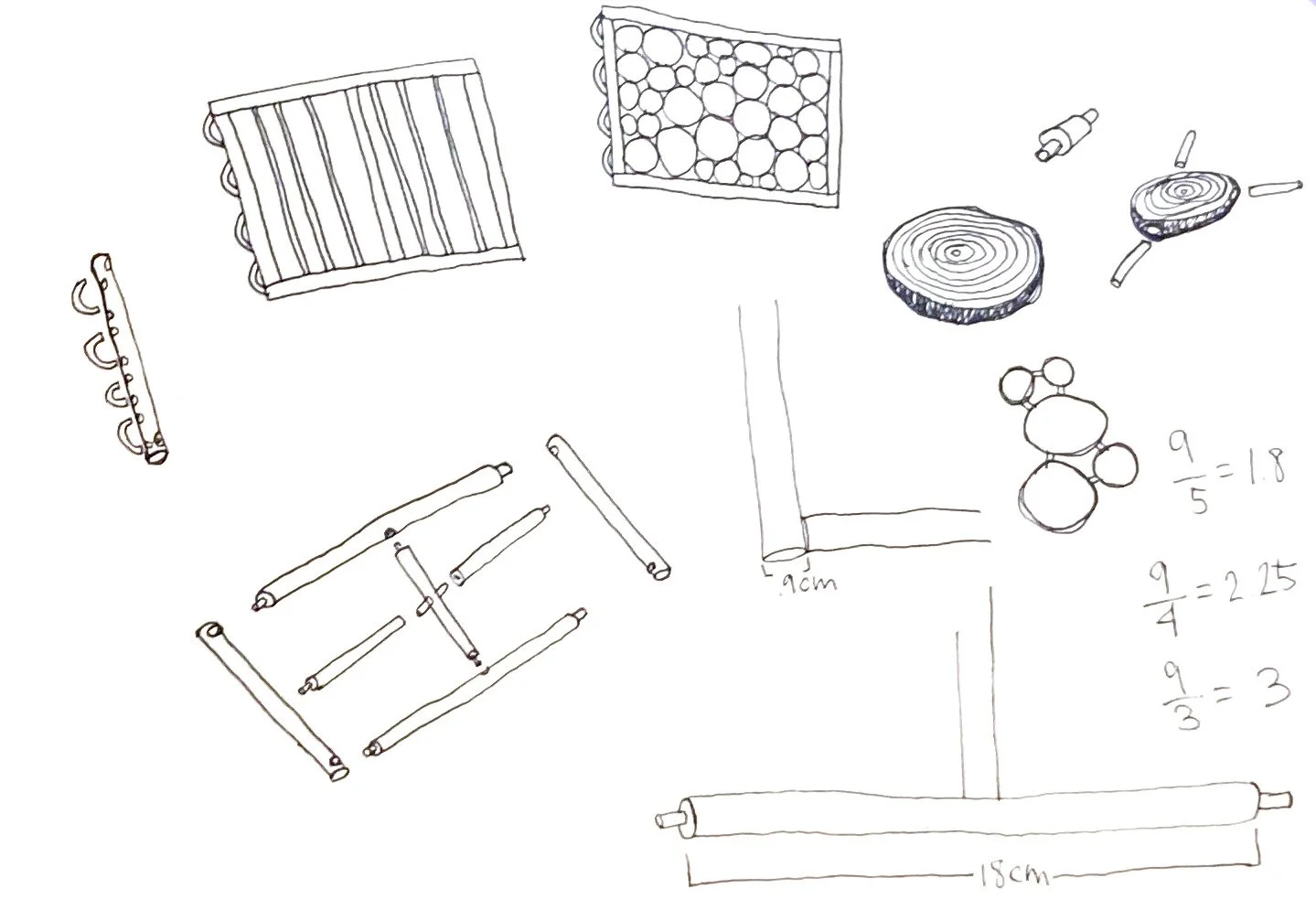
The front cover was woven together and the back cover was complied of cross section pieces of the trunk attached together with branch pieces drilled into the sides. The pages are made of paper created with bark pulp and water. On each page there is a recipe to make a different material with the tree and these recipes are written with ink created from charcoal from burnt tree pieces and written with a make shift pen from a tree branch.
Boiling pine needles to soften and extract fibers from interior. Tried boiling in just water and peeling husk of needle. Mixed water with sodium bicarbonate to try to chemically breakdown tough exterior. Ground needles in mortar and pestle to try to loosen husk and extract fiber.
Research Precedent:
From this process, I also created a pine needle dye that I used to dye cotton fabric a light pink/beige color.
Branches