The Lifecycle of a Climbing Shoe
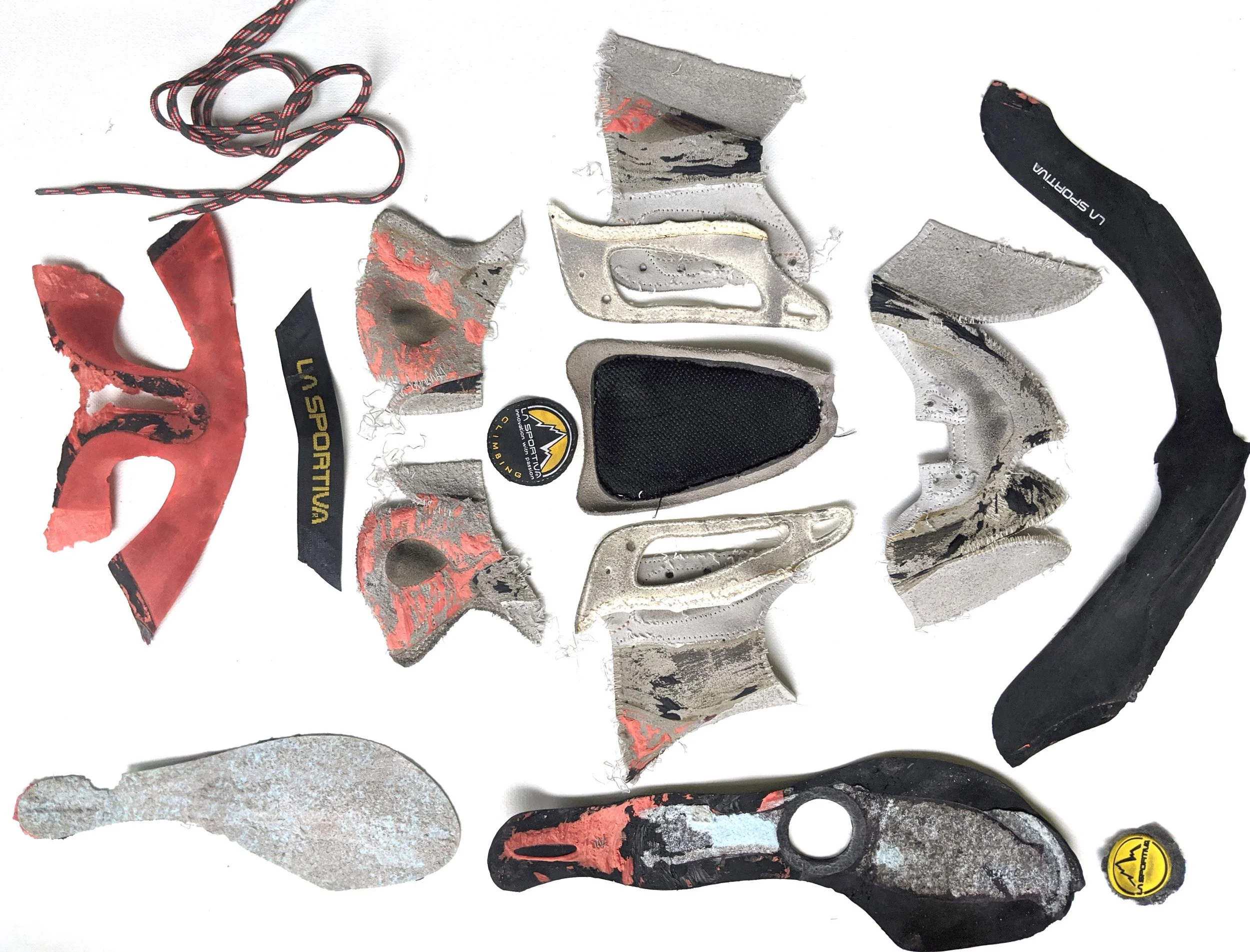
Climbing shoes are the most ubiquitous piece of climbing equipment. They are a high performance and very specialized shoe that allows climbers to grip rock and plastic in all sorts of conditions and maximize performance.
This project began with a lifecycle assessment of a La Sportiva Finale climbing shoe to understand the processes that each material goes through in extraction and manufacturing, the chemical additives and the mechanical equipment needs, as well as how these shoes are then assembled, used, and discarded.
After conducting this lifecycle assessment I dug into the biggest sources of waste, pollution, health impact, and environmental consequences to find points of intervention in these process.
Lifecycle Assessment of a climbing shoe
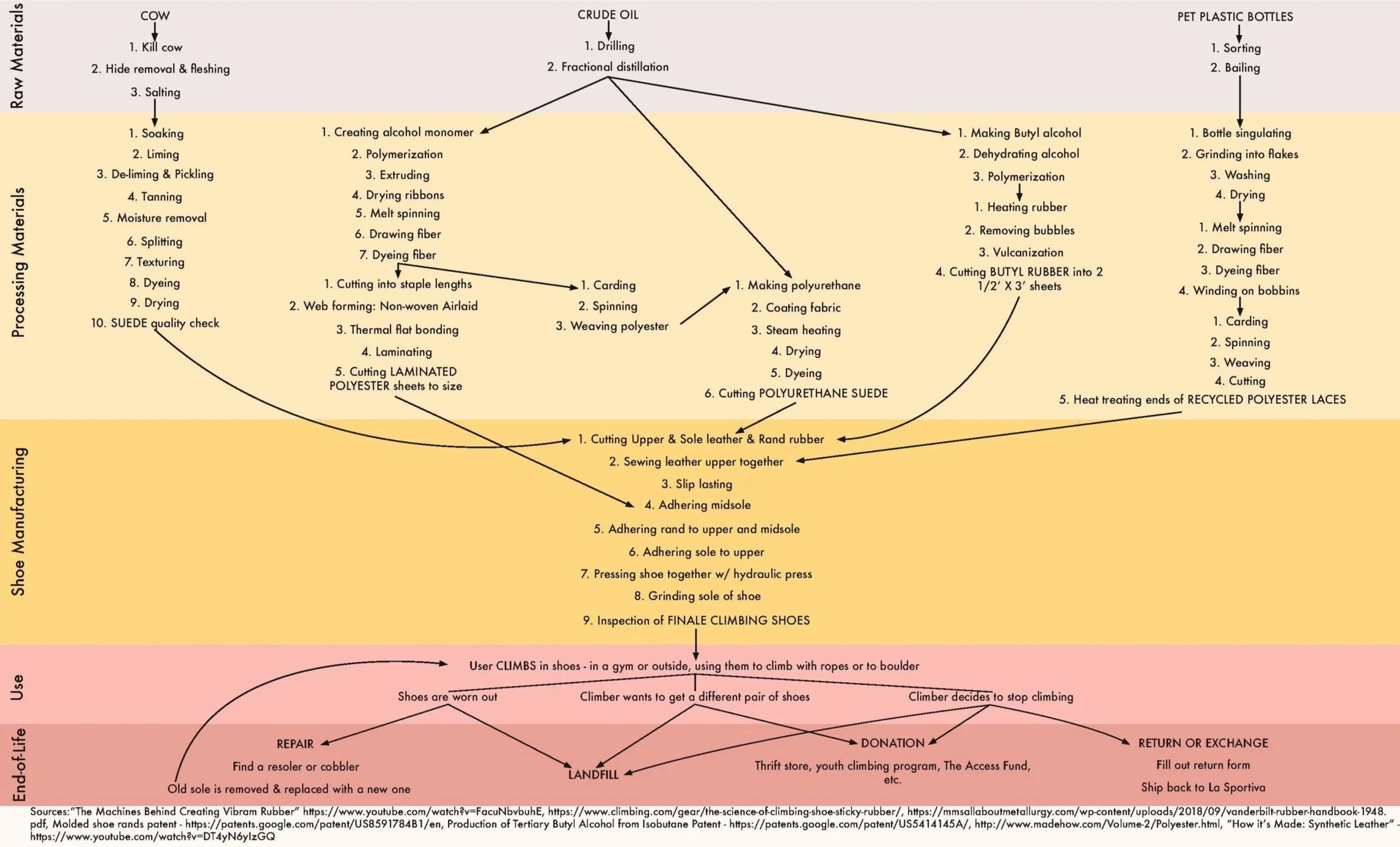
Climbing Shoe Lifecycle Impacts
Raw Materials
GLOBAL WARMING:
Methane (from cows & oil refining) and CO2 (from recycling & oil refining) heat up planet causing ice caps to melt, sea levels to rise and increase in severity and frequency of natural disasters
DESTRUCTION OF LAND & CULTURE:
Oil drilling infrastructure and oil spills destroy ecosystems
Drilling on Indigenous peoples’ land affects Indigenous sovereignty
The meat & dairy industries destroy ecosystems through clear cutting. Crops to feed cattle can lead to soil degradation and the cows can cause erosion.
HEALTH:
Oil processing can affect health of humans and animals living near extraction sites. The machinery causes noise pollution and drilling process can poison water.
Processing Materials
WASTE:
Vulcanization makes rubber very difficult to recycle so its scraps are usually landfilled, taking hundreds of years to biodegrade.
Polyester scraps in the landfill take hundreds of years to decompose.
WASTING & POLLUTING WATER:
Tens of thousands of liters of water are used to process a single hide for leather. Chromium waste from tanning is considered hazardous by the EPA and must be disposed in special dumping grounds.
HEALTH:
Some of the chemicals used to process leather, like chromium or arsenic or chemicals used in some dyes are known to cause respiratory problems, cancer, and other long term health issues.
Isocyantes used to make polyurethane suede are classified as potential human carcinogens and exposure can cause lung problems and cancer.
Processing recycling is hard manual labor and may lead to on job injuries.
Shoe Manufacturing
GLOBAL WARMING:
The La Sportive factory uses energy to run their cutting, grinding, compressing, and sewing machines, producing CO2, which is absorbed in the atmosphere and contributes to heating the planet.
HEALTH:
Making climbing shoes involves skill and manual labor. Many pieces of the shoe are assembled by hand. This can lead to on the job injuries.
The adhesive used to fix the midsole, rand, and sole contain ethyl acetates and xylene, which both can irritate the skin and eye. Prolonged use of xylene can lead to lung issues, dizziness, and death.
WASTE:
Scraps from cutting out leather and rubber as well as grinding down rubber, create waste that is usually sent to the landfill where it takes hundreds of years to decompose. (La Sportive is trying to minimize scraps in cutting process. Some rubber scraps are used to create EcoRubber. Leather scraps are used on clothing or sent to Samuele Cooperative in Italy which focuses on job training and teaching people to create leather goods that La Sportive sells for them.
Use
DESTRUCTION OF LAND:
Outdoor climbing can cause damage to rock, due to pulling on holds and drilling protective gear into stone. When new routes are created, existing vegetation is removed from rocks.
When recreating outside, some climbers leave behind trails and gear, further polluting the landscape.
End-of-Life
WASTE:
The very end of life for all climbing shoes is the landfill. Because they are made to be durable and are extremely difficult to disassemble and separate out materials for recycling.
The life of shoes can be extended. Resoling shoes has been a part of climbing culture since the onset of climbing and this allows shoes to last much longer.